
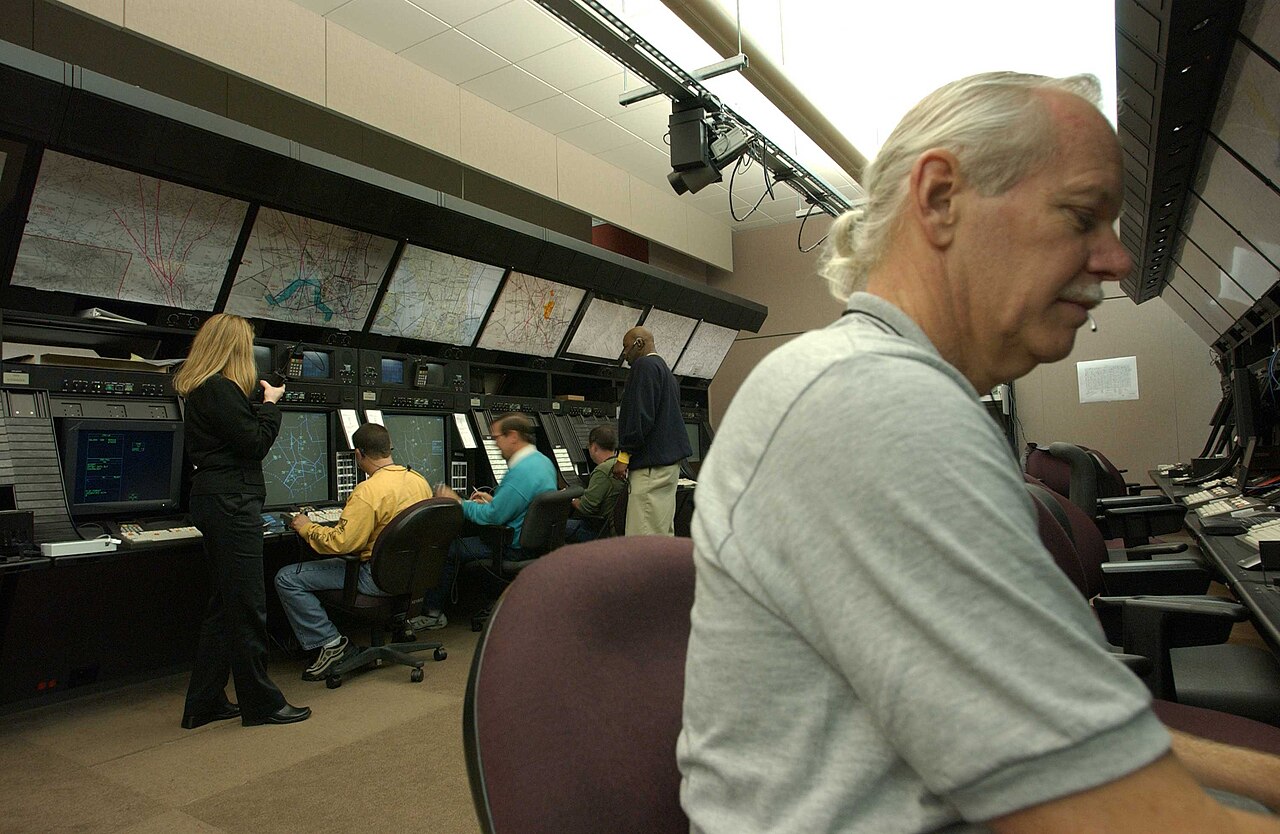
Air travel across the United States is struggling to recover Friday night after the Federal Aviation Administration halted departures at every U.S. airport for more than four hours, a rare nationwide ground stop triggered by a failure in the communications systems that link the country’s air traffic control centers.
The stop began shortly before 4 p.m. ET on Friday, November 13. Transportation Secretary Sean Duffy said the airspace was reopened at 8:15 p.m. ET, but by then thousands of flights had been scrapped, and airlines warned that disruption would carry into the weekend as planes and crews are moved back into position.
The story in 7 points
- The FAA ordered a ground stop for all departures at U.S. airports on Friday afternoon, citing safety and extraordinary circumstances.
- Duffy said a communication issue affected all of the nation’s Air Route Traffic Control Centers.
- The airspace reopened at 8:15 p.m. ET, after a shutdown lasting more than four hours.
- FlightAware data cited by ABC News showed nearly 5,000 flights canceled on Friday and close to 800 more for Saturday.
- Duffy blamed aging technology, saying overloaded routers carrying air traffic data began sending inconsistent information.
- Homeland Security Secretary Markwayne Mullin said there was no indication of a cyberattack or deliberate interference.
- Delta and United are waiving change fees for affected travelers, and further delays are expected through the weekend.
The disruption started when the FAA posted an alert halting departing aircraft nationwide. International flights headed to the U.S. were handled case by case, and according to Flightradar24 roughly 3,100 flights were already en route to American airports when the order came. Reports said European authorities paused some U.S.-bound departures and Mexico briefly held flights bound for the United States.
Speaking at the White House on Friday evening, Duffy pointed to the age of the system. “What we have is an incredibly old air traffic control system,” he said, according to reports. Mullin described the outage as a telecommunications failure and a major engineering problem. CBS News, citing unnamed sources, reported that an update to a private communications network serving air traffic control set off a reboot and then a crash; that account has not been officially confirmed.
It was the first nationwide ground stop since January 2023, when a failure of the FAA’s pilot-alert (NOTAM) system grounded departures, and before that the September 11, 2001 attacks. JetBlue and United canceled most of their remaining flights Friday night, and the Big 12 Conference said it was reviewing whether Saturday’s college football schedule would need changes because of team travel problems.
Why it matters
The outage showed how a single technical weak point can freeze the busiest airspace in the world within minutes. It also adds pressure to the long-running effort to modernize U.S. air traffic control. Congress approved $12.5 billion for upgrades in 2025, while Mullin put the cost of a complete overhaul at about $50 billion. With the Thanksgiving travel rush less than two weeks away, airlines and passengers will be watching closely for signs that the system is stable.
Next, the FAA is expected to continue investigating what caused the failure, while airlines work through the backlog of canceled trips. Travelers flying this weekend are being told to check their flight status directly with their airline before heading to the airport, and to use fee waivers if they need to rebook.
Sources: ABC News, CBS News, Fox News, IBTimes via Yahoo News